 how-to
How Often Should Gutters Be Cleaned? A Homeowner's Guide
Table of Contents
- Why Gutter Cleaning Frequency Isn't a One-Size-Fits-All Answer
- Signs Your Gutters Need Cleaning Right Now
- The Spring and Fall Schedule Most Homes Actually Need
- How Tree Density, Roof Type, and Climate Change Your Timeline
- Gutter Guard Installation: What It Changes About Cleaning Frequency
- Professional Gutter Cleaning Cost vs. DIY: What You're Really Paying For
- What Happens If You Skip Gutter Cleaning Altogether
- Conclusion
- Frequently Asked Questions
Last Updated: October 2, 2026
Why Gutter Cleaning Frequency Isn't a One-Size-Fits-All Answer
Most homeowners searching for how often should gutters be cleaned run into the same recycled advice: twice a year, every year, no exceptions. That number isn't wrong, but it's incomplete. The honest answer depends on your trees, your roof, your climate, and whether you've added gutter guards. A home surrounded by mature oaks needs far more attention than a new build on an open lot.
Signs Your Gutters Need Cleaning Right Now
The clearest sign your gutters need cleaning is water spilling over the sides during a rainstorm instead of flowing through the downspouts. If you see that, don't wait for your calendar to catch up. Other warning signs include sagging gutter runs, stained siding, and a gutter that feels heavy when you tap it from below.
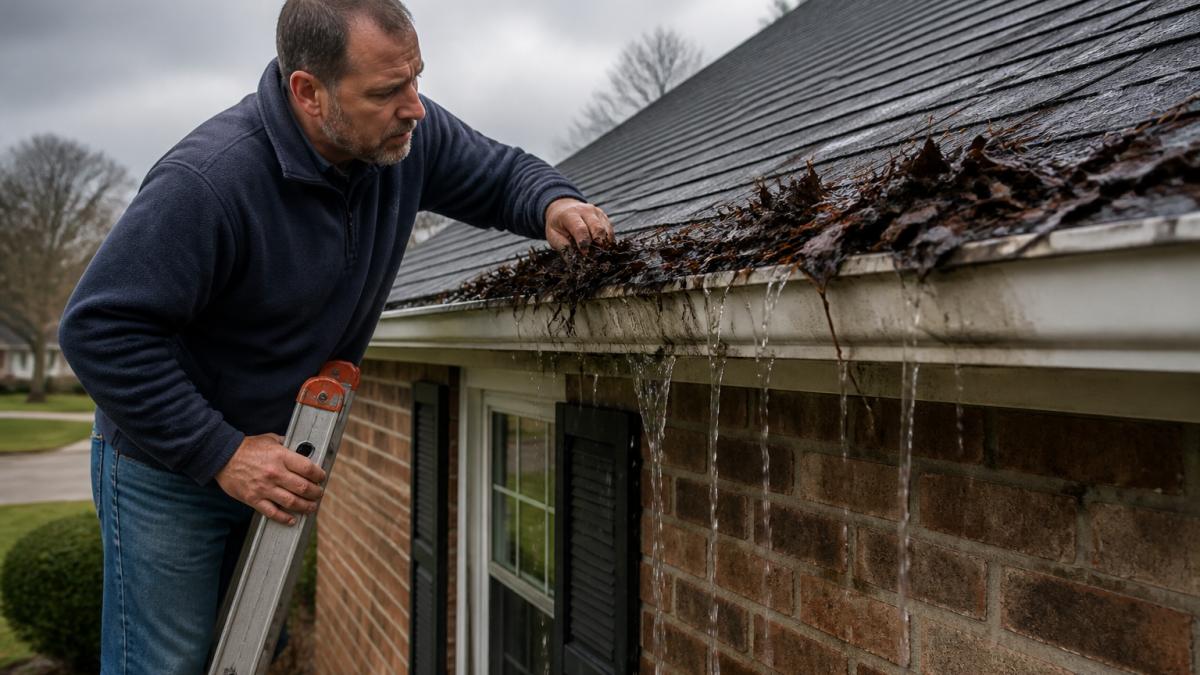
Overflowing Water and Staining on the Fascia
Water that escapes the gutter doesn't just disappear. It runs down your fascia board, the trim behind the gutter, and leaves dark streaks. Over time, that constant moisture rots the wood and can seep into the soffit above. Streaking on the fascia is one of the earliest visible clues that debris has built up.
Plants Growing in the Gutter and Pests Taking Residence
When you can see seedlings sprouting from your roofline, the debris has been sitting long enough to compost. That damp, rotting material draws mosquitoes, ants, birds, and rodents. It also adds weight that pulls the gutter away from the house, which throws off the gutter pitch and makes the whole system drain worse.
The Spring and Fall Schedule Most Homes Actually Need
For most homes with average tree cover, clean your gutters twice a year: once in late spring and once in late fall. This twice-a-year baseline works because it targets the two seasons that dump the most debris into your gutters.
Why Spring Showers Matter More Than You Think
Spring brings two things at once: heavy rain and the leftover debris from winter. Pollen, seed pods, and the grit washed off your shingles all collect in the channel. If the gutter is already partly blocked, spring showers have nowhere to go. That's when overflow starts, and that's when water finds your foundation.
Fall Leaf Accumulation and the Case for a Third Cleaning
Fall is the obvious one. Leaf accumulation from October through December can fill a gutter to the brim in weeks if you have overhanging trees. For those homes, a third cleaning in early winter, after the leaves have dropped, keeps the system clear going into the cold months. Waiting until spring means the debris sits there all winter, trapping moisture and feeding ice dams.
How Tree Density, Roof Type, and Climate Change Your Timeline
Your specific timeline comes down to three factors: how many trees overhang your roof, what your roof is made of, and what your local climate throws at you.
- Tree density: No overhanging trees means twice a year is plenty. A few nearby trees mean three times. Direct canopy coverage can mean quarterly.
- Roof type: Asphalt shingles shed granules that collect in gutters, so they need more frequent clearing than metal roofs.
- Climate: Heavy snow and freeze-thaw cycles raise your ice dam risk, which calls for a pre-winter cleaning. Wet, storm-heavy regions need more attention than dry ones.
Gutter Guard Installation: What It Changes About Cleaning Frequency
Gutter guards reduce how often you clean, but they don't make cleaning disappear. Most guides stop there, which is exactly why homeowners end up with clogged gutters behind a guard they assumed was self-cleaning. The truth is more mechanical: guards change what gets into your gutter and how fast it accumulates, and that determines your new schedule.
How Guards Actually Work (and Where They Fail)
A gutter guard is a screen, mesh, or solid cover that sits over the channel. Water is supposed to pass through or around it while leaves and large twigs stay on top, where wind and gravity carry them off. The failure points are predictable:
- Mesh size vs. debris size. Fine mesh (often called micro-mesh) blocks pine needles and shingle granules better than a coarse screen, but it also clogs faster with pollen, seed pods, and roof grit. Coarse screens let those smaller particles straight into the channel.
- Surface tension and overshoot. On heavy rain, water can sheet over a solid or fine-mesh guard and miss the gutter entirely, especially on steep roof pitches. That water lands at your foundation instead of your downspout.
- Downspout bypass. Even a perfect guard can't stop what already entered the system. Granules, grit, and small debris that slip past the guard still travel to the downspout and can block it from below.
- Debris on top. Leaves sitting on a guard don't always blow away. Wet leaves mat down, hold moisture against the guard, and can promote rust on steel systems or algae growth on the surface.
A Realistic Maintenance Schedule With Guards
Instead of the open-gutter baseline of two to four cleanings a year, think in terms of an annual inspection plus a cleaning only when the inspection calls for it:
- Once a year, inspect. Get on a ladder (or have a pro do it) after the fall drop and check the guard surface, the gutter channel through any gaps, and the downspout flow with a hose.
- Clean the guard surface as needed. A leaf blower on low or a soft brush clears matted debris without removing the guard.
- Flush the channel and downspouts annually. This catches the granules and grit the guard let through.
- Expect a full cleaning every one to three years depending on tree type. Pine needles and shingle granules are the two debris types most likely to defeat a guard.
When Guards Are Worth It, and When They Aren't
Guards earn their cost when you have heavy leaf drop from deciduous trees and you're paying for professional cleanings multiple times a year. They earn less when your main debris is pine needles, seed pods, or shingle granules, because those slip past most designs and still require annual flushing. If your roof is new and shedding granules, a guard won't solve the downspout-clogging problem, only regular flushing will.
Professional Gutter Cleaning Cost vs. DIY: What You're Really Paying For
Professional gutter cleaning cost reflects more than labor. It covers the right equipment, the safety of working at height, and proper disposal of the debris. DIY saves money on paper, but you're paying in ladder safety, time, and risk. To make a real decision, break the trade-off into its actual parts.
What Drives the Price of a Professional Cleaning
Most professional pricing scales with a handful of measurable factors, not a flat rate:
- Home height and stories. A single-story ranch is the cheapest; two- and three-story homes require taller ladders or a ladder standoff and take longer.
- Linear footage of gutter. More feet of channel means more time on the ladder.
- Debris volume and type. Packed, wet leaves and shingle granules are heavier and slower to remove than dry leaves.
- Roof pitch and access. Steep roofs, tight side yards, and landscaping under the roofline slow the job.
- Downspout condition. Clearing a blocked downspout is often billed as an add-on.
- Guard removal and reinstallation. If you have guards, expect the quote to reflect the extra handling.
The Real Cost of DIY
DIY looks free because the labor is yours, but the equipment and risk aren't:
- Ladder. A stable extension ladder sized for your home's height is a real purchase, and a ladder standoff or stabilizer is worth adding for gutter work.
- Safety gear. Non-slip gloves, eye protection, and a bucket hook or gutter scoop are the minimum.
- Hose and nozzle. You'll need a way to flush the channel and test downspout flow.
- Disposal. You're bagging and hauling the debris yourself.
- Time. Plan on one to three hours per cleaning for an average single-story home, more for two stories or heavy debris.
- Risk. Falls from ladders are a leading cause of home injury, and a wet, leaf-slicked roof is about the worst place to find out you're unsteady.
The Break-Even Logic
Run the math on your own situation. If you clean twice a year and each DIY session costs you a Saturday morning plus wear on your equipment, the professional quote starts to look less like an expense and more like buying back your weekend and removing the fall risk. If you clean once a year on a single-story home with light tree cover, DIY can pencil out, provided you're comfortable on a ladder.
| Factor | DIY | Professional |
|---|---|---|
| Upfront cost | Equipment purchase | Quoted per home |
| Ladder safety risk | High | Handled by trained techs |
| Time per cleaning | 1-3 hours | Off your plate |
| Debris disposal | Your problem | Included |
| Damage risk to gutters | Higher | Lower |
| Downspout clearing | Often overlooked | Usually included or itemized |
Never clean gutters while standing on the top rung of a ladder or reaching sideways to grab debris. Both moves are how most gutter-related falls happen. Move the ladder instead.
What Happens If You Skip Gutter Cleaning Altogether
Skipping gutter cleaning doesn't save money. It moves the cost somewhere more expensive. When gutters clog, water has nowhere to go but into your home's structure.
- Foundation damage: Overflow pools at the base of your house and can crack the foundation over time.
- Roof and fascia rot: Water backs up under the roof edge and rots the wood.
- Ice dams: In cold months, trapped water freezes and forces its way under shingles.
- Pest infestations: Damp debris becomes a nesting ground.
- Landscaping loss: Uncontrolled roof runoff washes out beds and soil.
After your last fall cleaning, run a hose through each downspout. If water backs up, the blockage is below the gutter, not in it. Clearing the downspout now prevents a winter freeze-up.
Conclusion
The real challenge with gutter cleaning isn't knowing the twice-a-year rule. It's knowing when your home needs more, and then actually keeping up with it. Miss the signs, and you're looking at foundation cracks, rotted fascia, and ice dams instead of a simple cleaning.
Frequently Asked Questions
How do you tell if your gutters need cleaning?
Look for water spilling over the sides during rain, sagging gutter sections, or visible debris like leaves and shingle granules near the downspouts. Staining on the fascia boards and mold growth on exterior walls are strong indicators. You can also check by running water through the gutter with a hose. If it pools instead of flowing to the downspout, debris is blocking the channel and cleaning is overdue.
Do gutter guards eliminate the need for cleaning?
No. Gutter guards reduce how often you need to clean, but they do not eliminate maintenance entirely. Shingle granules, small seeds, and fine debris still pass through most guard systems and settle at the bottom of the gutter over time. Homeowners with gutter guard installation should still inspect their gutters at least once a year and clean them when buildup is visible, especially after heavy spring storms or fall leaf drop.
What happens if you don't clean your gutters?
Clogged gutters force water to overflow and pool around your foundation, which can lead to cracks, basement flooding, and costly structural damage. Water backing up under the roof edge rots the fascia and soffit boards. In colder months, trapped water freezes and forms ice dams that damage shingles. Standing water in gutters also attracts mosquitoes and pests, and the excess moisture can cause mold growth on exterior walls.
How much does professional gutter cleaning cost?
Pricing for professional gutter cleaning depends on your home's square footage, the number of stories, the amount of debris, and whether guards are installed. Most providers offer free estimates so you know the price before work begins. EverClean Exterior Cleaning provides honest, upfront pricing and a 48-hour satisfaction guarantee. Visit their website or call for a free estimate tailored to your property.